Participation in the Fourth High-Level International Conference on the International Decade for Action “Water for Sustainable Development”
Participation in the Fourth High-Level International Conference on the International Decade for Action “Water for Sustainable Development”, 2018–2028
Dushanbe, Tajikistan (25–28 May 2026)
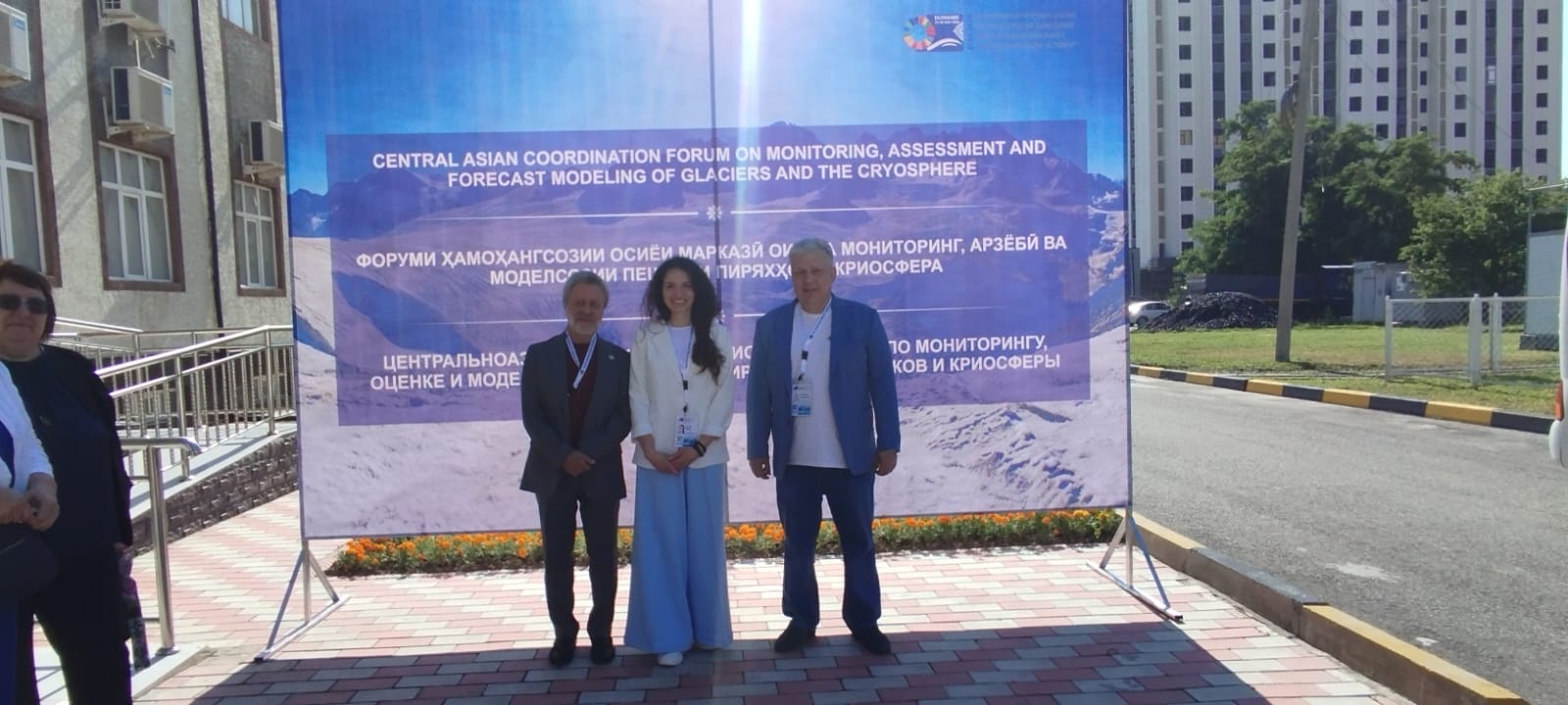
The Centre’s staff members A.B. Yegorov, N.V. Pimankina, A.L. Kokarev, and I.A. Dikikh participated in the Fourth High-Level International Conference on the International Decade for Action “Water for Sustainable Development”, held in Dushanbe. They also took part in the Central Asian Coordination Forum on Glacier and Cryosphere Monitoring, Assessment, and Predictive Modelling, which was aimed at addressing the region’s key environmental and socio-economic challenges.
The conference programme included an official opening ceremony, high-level plenary sessions, thematic sessions, and an international exhibition. The participants focused primarily on ensuring continuity between the 2023 UN Water Conference and the upcoming 2026 UN Water Conference, promoting international cooperation, stimulating investment in the water sector, strengthening sustainable water resources management, and accelerating progress towards achieving the water-related Sustainable Development Goals.
As part of the session “Decade of Action for Cryospheric Sciences – Regional Dialogue on Glacier and Cryosphere Monitoring in Central Asia”, Alexander Kokarev, Head of the Snow and Glacier Resources Dynamics Monitoring Laboratory, delivered a presentation on behalf of Kazakhstan entitled “Activities of the Central Asian Regional Glaciological Centre, a UNESCO Category 2 Centre”.
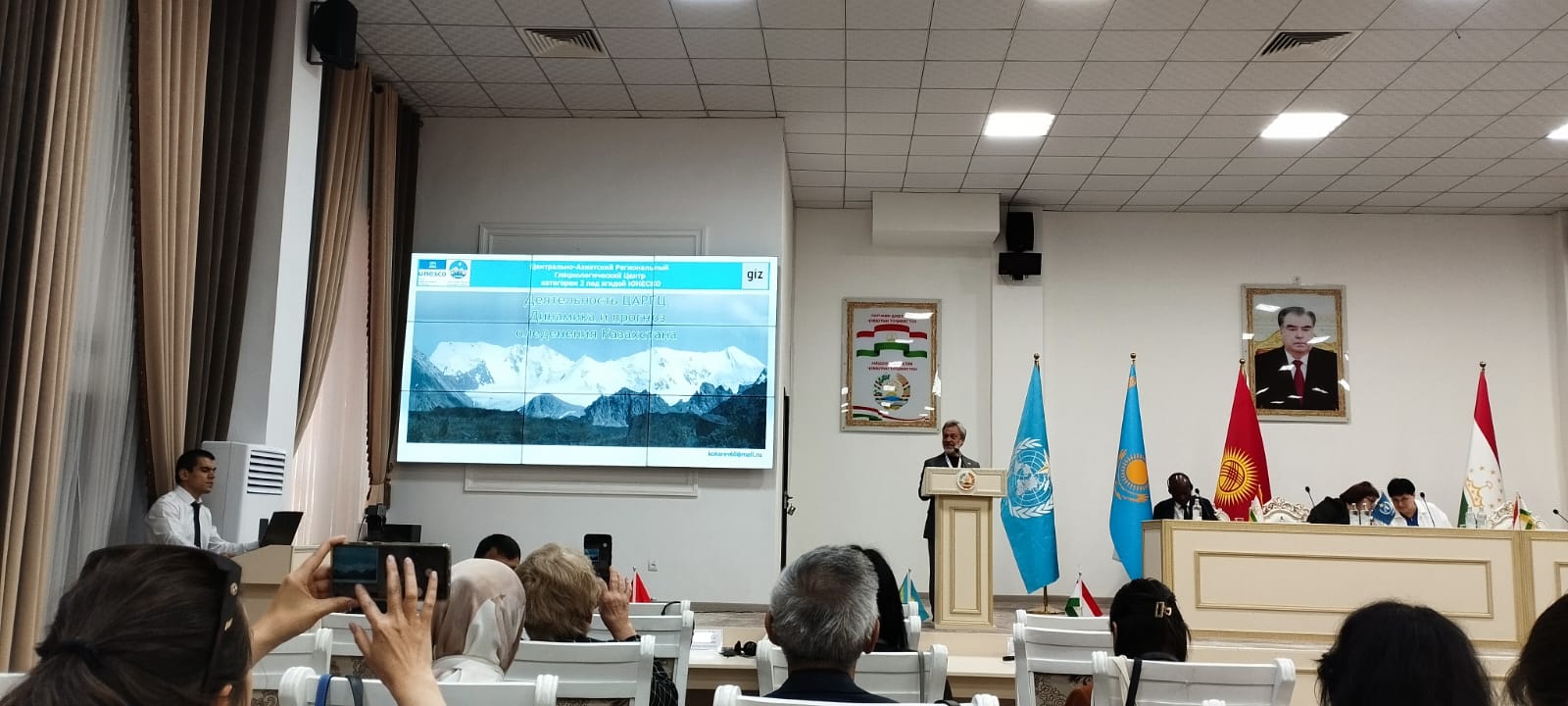
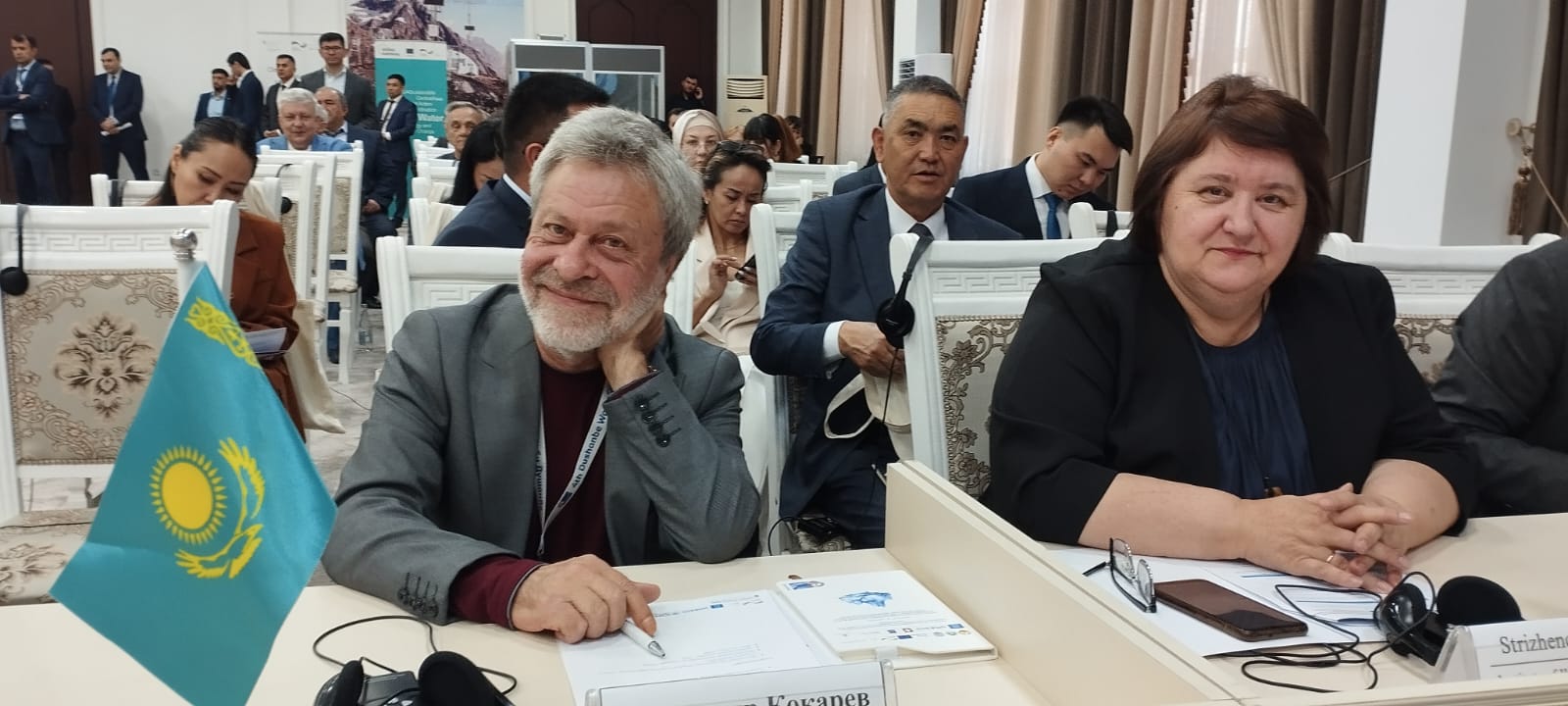
The objective of this session was to strengthen scientific and institutional cooperation among the countries of the region in order to improve data quality and support coordinated climate change response measures.
A.L. Kokarev and A.B. Yegorov also participated in the panel discussion “Advancing Science and Policy: Regional Approaches to Glacier Monitoring and Cryosphere Governance”, which focused on the development of scientific approaches and regional policies in the field of glacier monitoring and cryosphere management. The session also aimed to enhance cooperation among countries for more effective data sharing and the joint resolution of common environmental challenges.
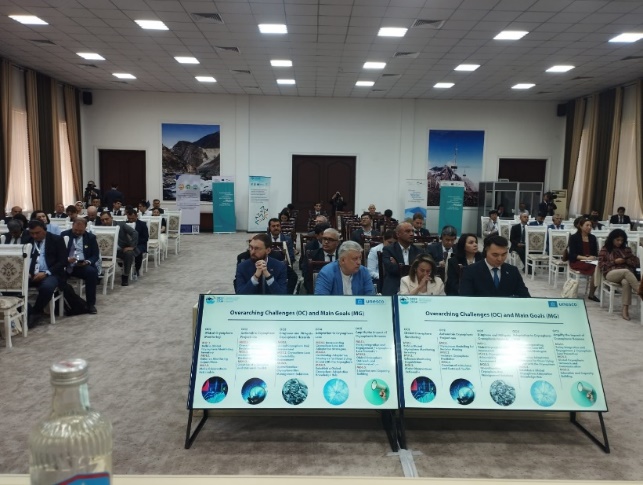
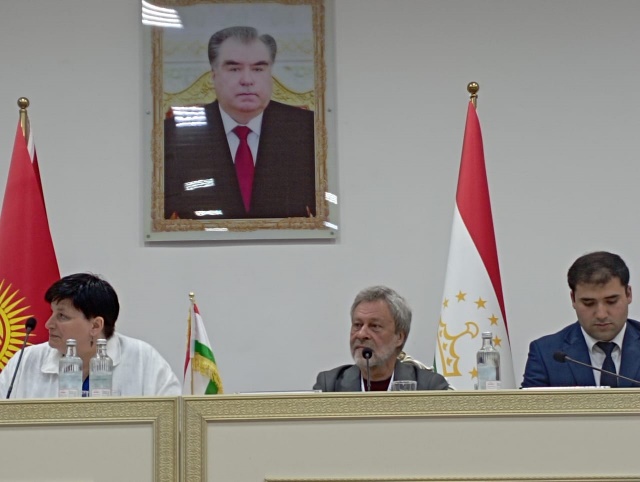
N.V. Pimankina and I.A. Dikikh participated in the panel discussion “Cooperation for a Sustainable Future: Cryosphere and Climate Risks”, during which participants discussed how regional cooperation can strengthen resilience to risks associated with the cryosphere and climate change, while highlighting the importance of the interconnection between science, policy, and collective action in addressing shared challenges under changing climatic conditions.
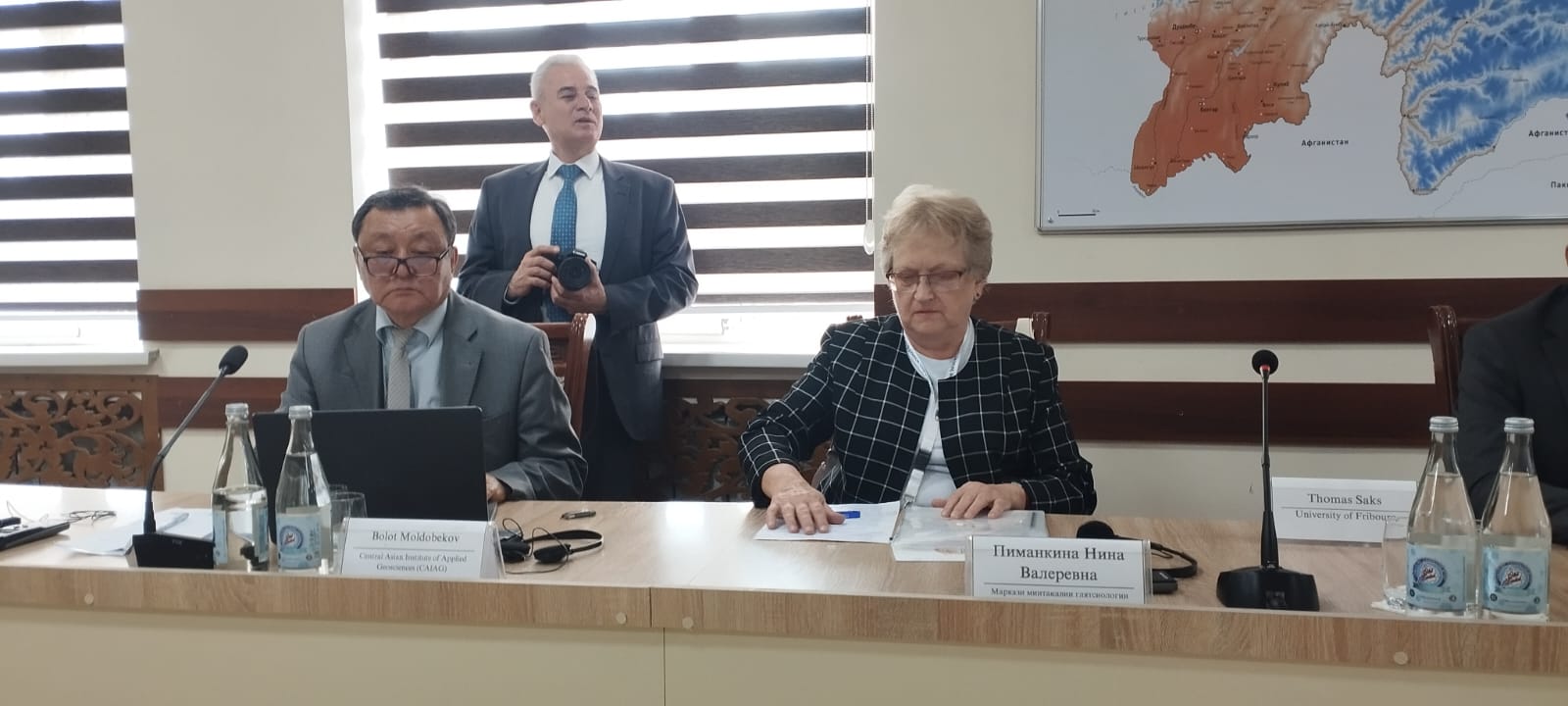
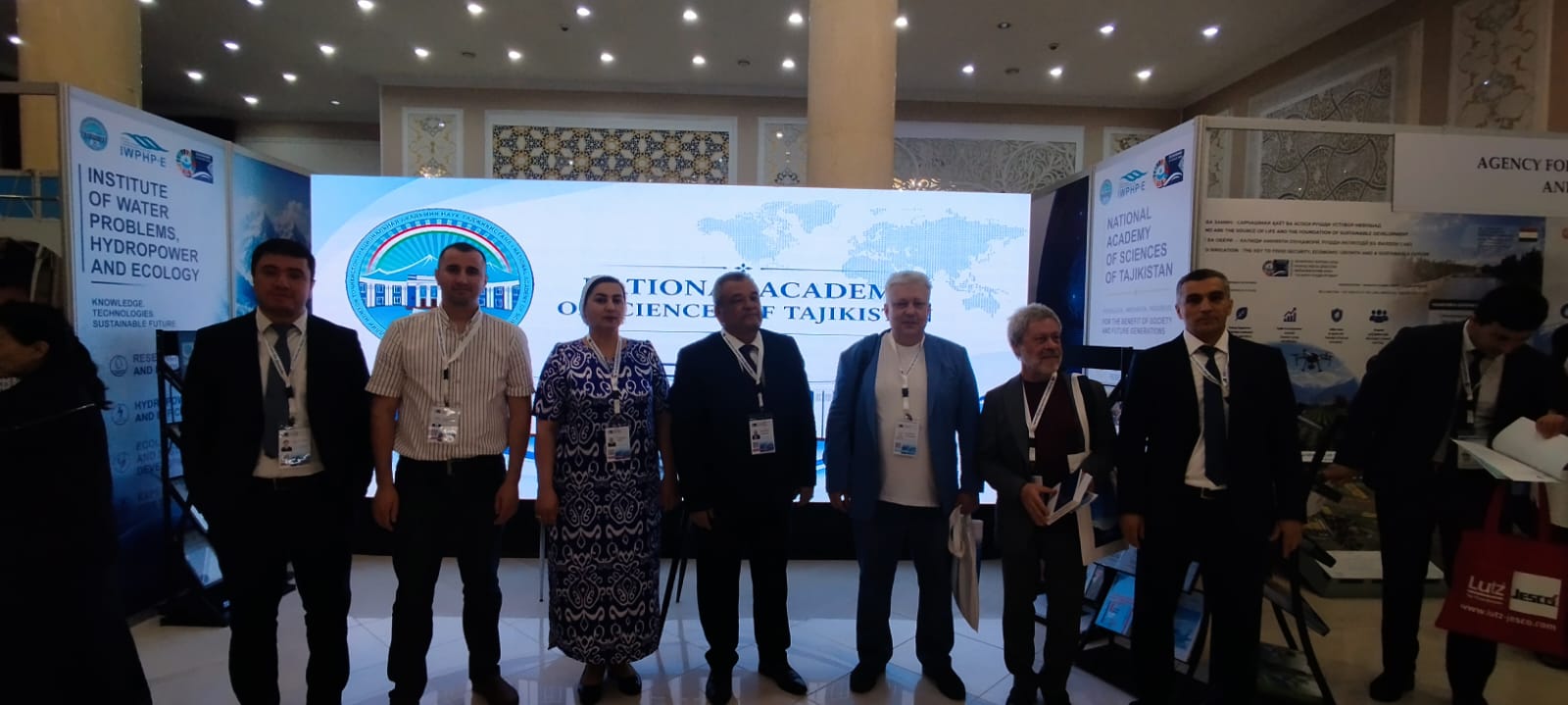
Participation in the thematic session “Water for the Planet – From Glaciers and Headwaters to the Sea.” The session addressed issues of water resources management throughout the entire hydrological system—from glaciers and mountain headwaters to rivers, wetlands, groundwater, and marine ecosystems. Discussions highlighted key priorities, including the promotion of integrated water resources management, strengthening international partnerships, implementing scientific and technological solutions, and enhancing global climate resilience.
Participation in the thematic session “Water for Cooperation.” The session focused on transboundary and international cooperation in water resources management, the development of river basin management approaches, the strengthening of institutional cooperation mechanisms, and the application of integrated approaches to the management of surface and groundwater resources.
Participation in the side event “Scientific Foundations of Glacier Monitoring in Central Asia for Sustainable Water Resources Management”, as well as in the 5th Meeting of the Regional Working Group on Glacier Monitoring and Modelling in Central Asia. The event was organized by the Agency for Hydrometeorology under the Committee for Environmental Protection under the Government of the Republic of Tajikistan, the German Agency for International Cooperation (GIZ) within the framework of the Green Central Asia Regional Programme, Phase II, and the European Union for Sustainable Development Project.
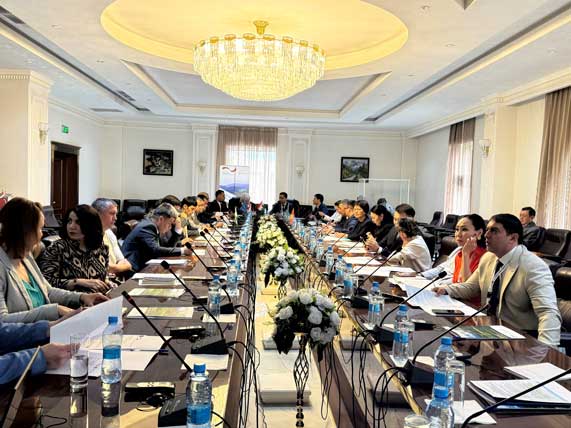
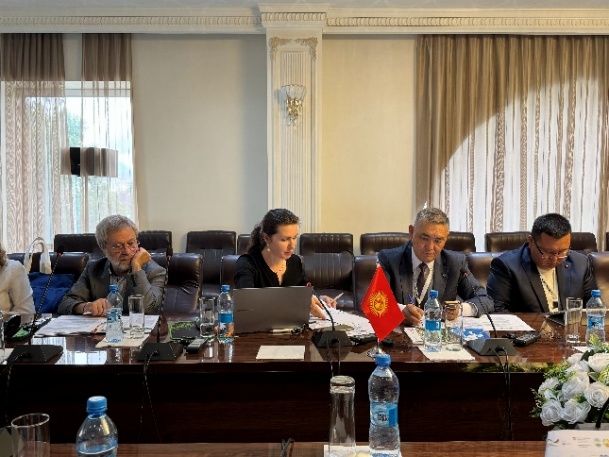
As a result of the side event, the following key aspects were discussed:
- Expansion of cooperation between Central Asian countries and international organizations.
- Introduction of participants to modern glacier monitoring methods, including remote sensing, field measurements, and modelling techniques.
- Identification of priority areas for joint activities and regional initiatives.
- Integration of regional experience into global processes of sustainable water resources management.
The particular significance of this side event lay in its integration into the programme of the Fourth High-Level International Water Conference, which brings together the global community to address issues of water security, climate change adaptation, and sustainable water resources management. Central Asian experience in glacier monitoring, supported through GIZ initiatives, data-sharing mechanisms, and collaborative modelling efforts, contributes not only to forecasting future changes in the region’s water resources but also to developing policy recommendations aimed at minimizing risks associated with water scarcity, floods, and environmental degradation.
Fourth High-Level International Conference
June 22, 2026